Saturday, May 14, 2011

Final Project-Womens Depiction in Latin American Novelas


      Welcome to my short film concentrating on the depiction of women in Latin American Novelas. To prepare for this interview/conversation I looked to Oprah Winfrey, Katy Couric and Zach Galifianakis as role models and took into account their interviewing talent.


This is my first interview and my first use of Final Cut Pro. In the filming of this footage I used my Panansonic hand held 3.1 megapixel video camera and a tripod. My husband stood behind the camera to make sure we were centered and he also assisted on the editing of this film. The lighting used was basic floor lamps and natural light and was filmed in my living room.
    Josephina agreed to be interviewed and was very helpful with her candid take on Novelas. Without her and my husband, this film could not be made and I am very grateful.
   So, sit back, relax and enjoy my film!

http://www.youtube.com/watch?v=9skd9Q2wZuw 


INSPIRING INTERVIEWS:
http://www.youtube.com/watch?v=1c-3FQap7iw

http://www.youtube.com/watch?v=YsbHhhJfTHg&feature=fvsr

http://www.youtube.com/watch?v=AITlyeUoQ5E

The images on this blog came from Google Images


TELENOVELA CLIPS SHOWN DURING THE INTERVIEW:
http://www.youtube.com/watch?v=meSgQa5WLjQ

http://www.youtube.com/watch?v=IkzaucWLdIg&NR=1

http://www.youtube.com/watch?v=VpfhdOGF__w&feature=related


Resources for NYC Women with Diabetes


We are all told that diet and exercise will help us lose weight, will keep us healthier. Changing one’s lifestyle is difficult with out motivation. According to the 2009 New York City Community Health Survey there are approximately 324,000 female diabetics here in New York City alone. Type II diabetes can be managed by diet and exercise.

When one is diagnosed with diabetes, if she is lucky, she is referred to the nutritionist. Other exercise and education programs may exist at a more robust clinic; however, most clinics are not equipped with health educators, certified diabetes educators or even nutritionists. Health care team education is vital.
If she has access to a computer, an internet search would provide her with some information. Patient education is critical. A website where women can enter their NYC zipcode and find best practice resources for diabetes. The best practice resources would be contributed by diabetes care team members. Today I'm presenting my best practice resources.

A link to my presentation is below:
Bibliography
Lorig, Kate, et al. Living a Healthy Life with Chronic Conditions: Self Management of Heart Disease, Arthritis, Diabetes, Asthma, Bronchitis, Emphysema, and others, third edition. Boulder: Bull Publishing Company, 2006. Print.

McCord, P., et al. “The Effect of Low Impact Dance Training on Aerobic Capacity, Submaximal Heart Rates and Body Composition of College-aged Females.” Journal of Sports Medicine & Physical Fitness. 29.2 (1989): 184-188. Print.

New York City Department of Health and Mental Hygiene. Epiquery: NYC Interactive HealthData System - [Community Health Survey 2009]. [Apr. 30, 2011]. http://nyc.gov/health/epiquery. Web.

New York City Department of Health and Mental Hygiene. My Plate Planner. Print.

Shimato, Hedeki, et al. “Low Impact Aerobic Dance as a Useful Exercise Mode for Reducing Body Mass in Mildly Obese Middle-aged Women.” Applied Human Sciences. 17.3 (1998): 109-114. Print.

The Reimagined Interpretation of Dance as My Final Project

According to Miguel Muñoz-Laboy, Hip-Hop culture is a key social medium through which many young men and women from communities of colour in the USA construct their gender. However the case may be, today, dance within the hip hop media is depicted as hypermasculinated featuring one or two muscular males and a hand full of scantily clad women dancing in over-sexually suggestive mannerisms. But can the same be said for female dancers within our spectrum of reality? That is what my final project tries to convey. My final project dissects the prevailing notions what is it means to be a female dancer on-screen in order to provide "real" dancers with the respect, definition, and interpretation that they ultimately deserve. The subjects of my project were my dearest friend and one of my dancing inspirations, Shelby "Shellz" Felton as well as my cousin with a strong connection to the fashion industry, American Apparrel. The reason I chose Shelby is because, unlike the media's portrayal of women and dance represented as half-naked women, Shelby uses her uniquely aggressive and heartfelt style of dance not only as her way of artistic expression, but she also uses her body and movements as her personal form of women empowerment. Very interesting as it is, her interpretative dance style allows her to convey a story which deviates from the prevailing ideas of dance as a form of dominating one's opponent or showing off flashy moves. I chose Wendy because she is an all-rounded dancer who understands that dance is much bigger than what individuals normally see on television. To Wendy, dance is defined as a story that each and every women tries to paint in the hopes of allowing their audience to understand their emotions through bodily movements rather through spoken word. I hope you all enjoy and understand my surreal message :].

Link to my documentary below:

http://www.youtube.com/watch?v=n1eA-AdmKqU

Apologies for late post. The youtube link took roughly 12-13 hours to fully process.

By the way, I wish everyone ALL THE BEST OF LUCK first or last (and in between lol)!!!!

Female Correspondents in the White House Press Corps

According to the Association for Education in Journalism and Mass Communication, women have comprised the majority of college journalism majors since 1977. However, according to the Poynter Institute’s American Journalist Survey, done in 2003, women represent only 37% of personalities on television, 33% of writers for daily newspapers, 22% of radio personalities, and 20% of representatives for a major wire service. Shockingly, the results of this survey differed very little from a similar one conducted by the Institute in 1982. Add onto this the fact that many of the stories given to female journalists are considered “fluff” pieces – centered on the entertainment industry, fashion, and beauty – and the severity of this issue becomes more apparent.

For my project, I decided to focus on a group of serious female journalists, journalists that are not degraded to "fluff" pieces based on their gender. I chose to make a movie in the styling of a broadcast news piece, highlighting three of these correspondents who stand out for various reasons.


Santeria Empowerment: A Female Perspective

My final project is about the religion of Santeria and the empowering effects it has had for the women who practice it. In order to explain these effects I decided to interview four priestesses ordained in this religion. These four priestesses have years that vary between three to thirty-six years. It was video recorded in an interview format a ranging from questions of their experiences as Iyawos, new initiates, to being madrinas, godmothers, to other initiates and other godchildren. This one of the many rare moments many of initiates in Santeria ever speak of their experiences before, during and after ritual and ceremony. I also discuss if there is problems with the compromising integrity and equality. In the process, I came to realize there have not been problems of that sort at all. This is due to the relationship between the godparent and godchild within an ILE, a house of worship or equivalent to a temple. Furthermore, the varying differences of respect between the senior elder, the Iyawo, and the godchild. My video is only a hard copy, and will not be viewed as a link.

Works Cited

Abimbola, Wande. Ifa Will Mend Our Broken World: Thoughts on Yoruba Religion and Culture in Africa and the Diaspora. Roxbury: Aim Books, 1997.

Brandon, George. Santeria from Africa to the New World: The Dead Sell Memories. Bloomington : Indiana University Press, 1993.

Brown, David H. Santeria Enthroned: Art, Ritual, and Innovation In An Afro-Cuban Religion. Chicago: The University of Chicago Press, 2003.

Cuando los Espiritus Bailan Mambo. Dir. Bobby Shepard. Prods. Bobby Shepard and Marta Moreno Vega. 2002.

Drewal, Thompson Margaret. Yoruba Ritual: Performers, Play, Agency. Bloomington : Indiana University Press, 1992.

Elebuibon, Chief Priest Ifayemi. Apetebii: The Wife of Orunmila. Brooklyn: Athelia/Henrietta Press, INC., 1994.

Johnson, Paul Christopher. Secrets, Gossip, And Gods. New York: Oxford University Press, Inc., 2002.

Murphy, Joseph M. and Mei-Mei Sanford. Osun across the Waters: A Yoruba Godess in Africa and the Americas. Bloomington: Indiana University Press, 2001.

Omari-Tunkara, Mikelle Smith. Manupulating The Sacred. Detroit: Wayne State University Press, 2005.

Vega, Marta Moreno. The Altar of My Soul: The Living Traditions of Santeria. New York: The Ballantine Publishing Group, 2000.

Film Credits

Title:Santeria Empowerment: A Female Perspective

Directed and Edited by Brian Tayco

Interviewed conducted by Brian Tayco

Women Interviewed:

Millie EwinTola

Barbara OshunTolu

Maria Alabi

Elizabeth OshunAladeKoide

Music Credits

"Yemaya Cantos"

Performed By: Emilio Barreto and Orlando "Puntilla" Rios

"Ochun Rezos"

Performed By: Emilio Barreto and Orlando "Puntilla" Rios


Stories of Abuse


So for my final project I chose to do a video on domestic abuse. I’m fortunate enough to have never been abused in my life but I’ve watched other people’s lives destroyed from abuse. Whether it’s physical or emotional, abuse cannot be accepted. For my video I interviewed some people on their own experiences with abuse and the result is some graphic accounts of abuse in their lives. This is a silent epidemic that needs to be dealt with. When I first started making this video I really didn’t have anyone in mind to interview. Through some small asking around I ended up finding four different women, all with a very unique and personal story. I struggled editing this video because honestly these stories barely need to be edited. Instead I chose to keep the video pretty simple, no major effects or music, just the stories.

Stories of Abuse Video

Password to access video: womenandmedia


Works Cited

Crane, Beth. Personal interview. 20 Apr. 2011.

"Domestic Violence Statistics | 2010 and 2009 Abuse Stats." Web. 15 Apr. 2011.

Domestic Violence Factoids. Richard J. Gelles. Web. 7 May 2011

Frank, Heather. Personal interview. 21 Apr. 2011.

Fuller, Karen. Personal interview. 19 Apr. 2011.

Get the Facts: The Facts on Domestic, Dating and Sexual Violence. Web. 7 May 2011.

"Introduction - Domestic Violence." Creative Communications Group, Web. 15 Apr. 2011. .

Ncadv.org. National Coalition Against Domestic Violence, 2005. Web. 15 Apr. 2011. .

Manchester, Tiffany. Personal interview. 19 Apr. 2011.

THIS IS A WAR.COM. Web. 15 Apr. 2011. .

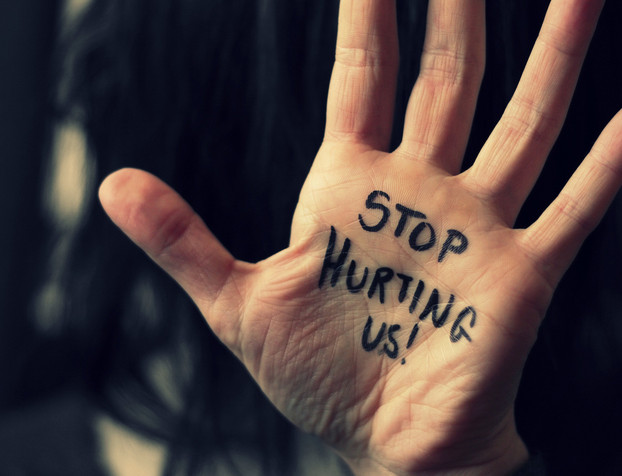
Stop Violence against women


Although the Constitution of Nepal provides protections for women, including equal pay for equal work, the Government has not initiated any significant steps to implement its visions.
South Asian countries Like NEPAL are primarily linked with the status of women in family, society and the state structures. Traditional ethical code of the society expects women to remain restricted within four walls of home, which is still a common occurrence. In some of the countries of South Asia women are outlawed even to cast votes. In NEPAL, women are discriminated, because of son preference traditions of the society dominated by religious beliefs. Daughters are discriminated from birth to funeral ceremony. Women are also suffering from domestic violence, wrong tradition and cultural malpractices. Some awful examples of violence are: sex selective abortion, wife battering, child marriage, polygamy, rape, sexual violence, trafficking of women & forced prostitution, sexual harassment, dowry, Tilak system, suicide, killings, and domestic violence, still prevailed. They are still accused in the name of Witchcraft. Members of Parliament have beugn working for the passage of tougher laws for such crimes but have had little success so far. Therefore I decided to my final project on status of women in NEPAL and violence against them.Hopefully my final project will create awareness among 21st century generation of women in USA and in NEPAL. In order to execute my final project i used website as a medium and here is the link to the website.


Reference:
Acharya, Meena,(2000) Labor Market Developments and Poverty : with Focus on Economic Opportunities for women, TPMF and Friedrich-Ebert-Stiftung, Kathmandu.


Česky. "Nepal - Wikipedia, the free encyclopedia". En.wikipedia.org. Retrieved 2010-04-08.

http://southasiarev.wordpress.com